
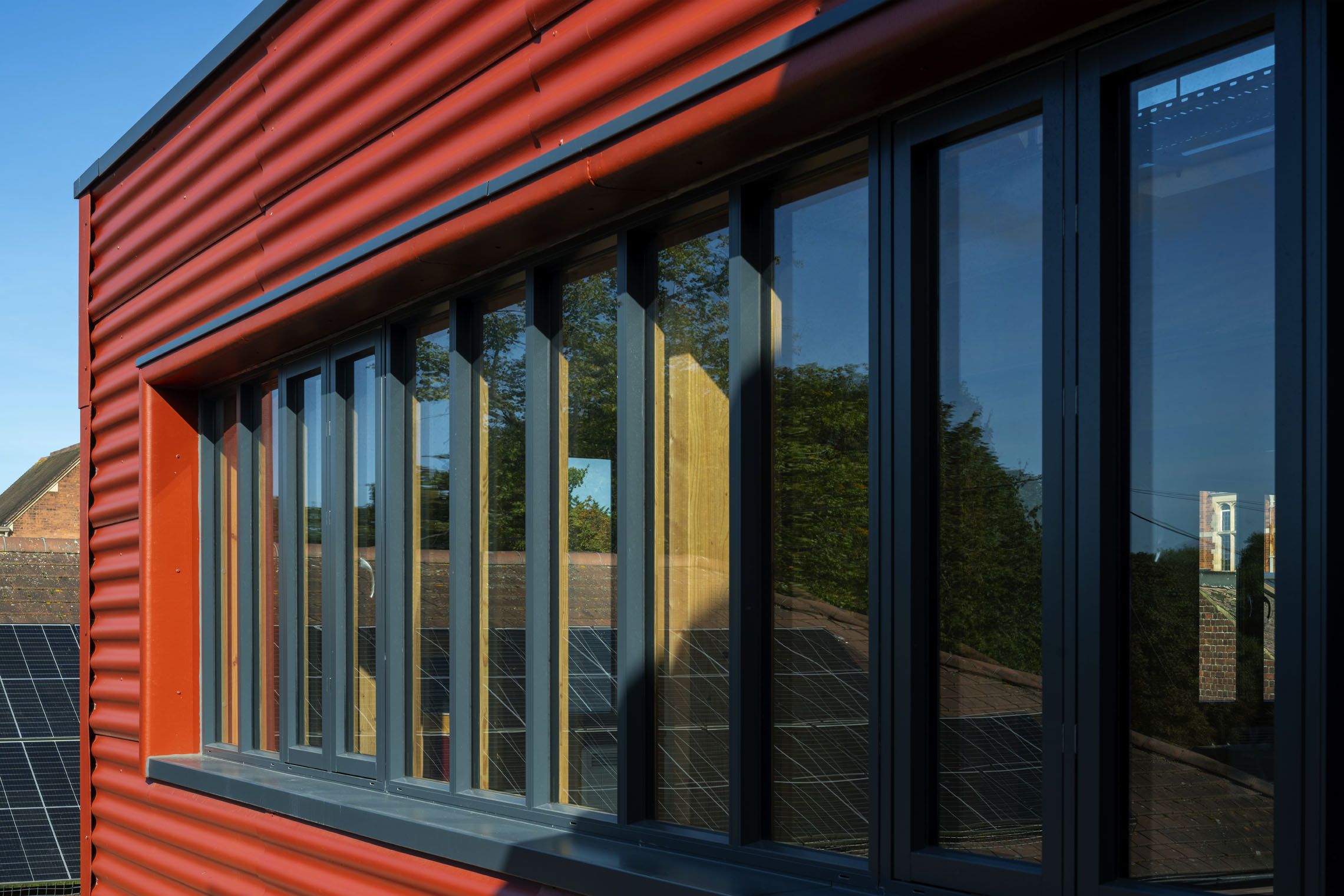
The Professional’s Guide to Composite Windows: Specification, Performance & Design
For architects, contractors and developers, window specification is about more than appearance. Thermal performance, durability, maintenance, glazing, acoustics and security all need to be considered.
Westcoast aluminium timber composite windows are designed and manufactured in Sweden, combining a durable aluminium exterior with the warmth and natural insulating properties of timber internally.
In this article:
- Composite vs aluminium-clad timber windows
- Thermal performance and glazing
- Design, finishes and opening configurations
- Durability and sustainability
- Security and compliance
- Specification and project support

What is a composite window?
The term composite window can cover different types of construction, so understanding what sits behind the specification is important.
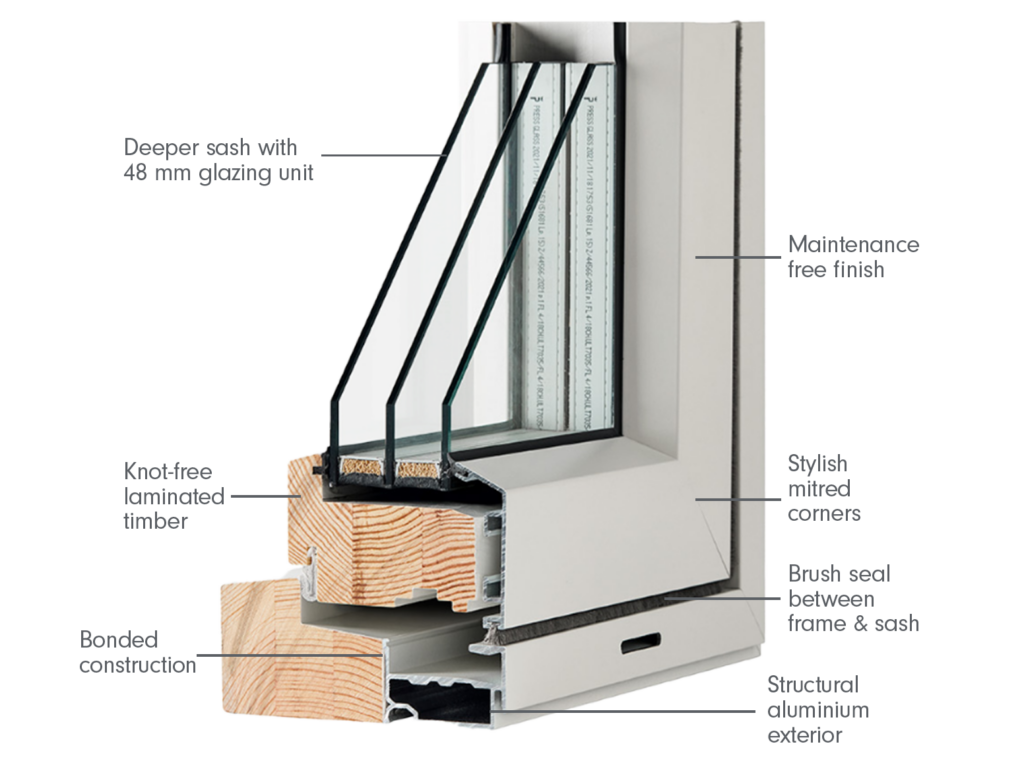
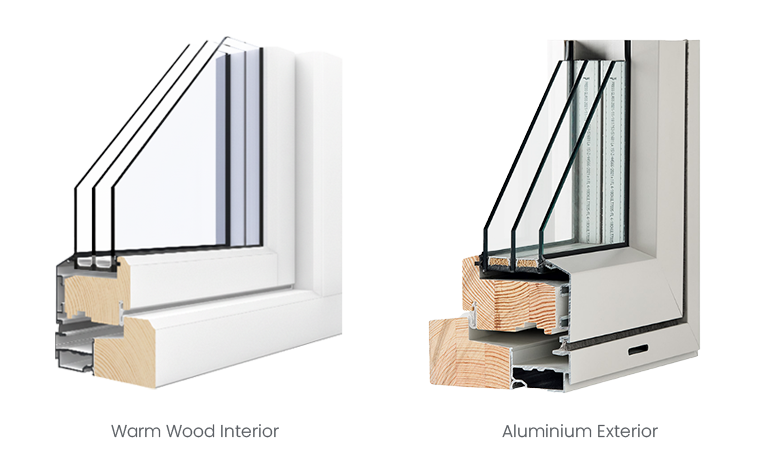
Westcoast uses a bonded aluminium and timber composite construction. The high-density timber inner section is bonded to the aluminium outer section rather than simply being covered by a clipped-on aluminium facing.
This creates a robust construction designed to protect the timber from external weather conditions while delivering excellent thermal performance, durability and low maintenance.
Composite vs aluminium-clad windows
Both composite and aluminium-clad windows combine the durability and weather resistance of aluminium externally with the warmth, natural character and insulating properties of timber internally.
The main difference is how the two materials are incorporated.
In a bonded composite window, the timber and aluminium form integral parts of the window construction. Aluminium-clad windows instead use a timber window construction with a protective aluminium exterior.
Modern aluminium-clad systems can offer excellent thermal performance and particularly slim frame profiles, helping maximise glazed area and natural daylight.
The right solution depends on the individual project and should be assessed against thermal and weather performance, glazing, opening configurations, maintenance, finishes and architectural design.
Why combine aluminium and timber?
The powder-coated aluminium exterior provides durable, low-maintenance protection from the elements and is available in a wide choice of colours. Unlike exposed painted timber, it does not require regular repainting – particularly valuable where future access and maintenance need to be considered.
Internally, timber provides a warmer, natural aesthetic. Westcoast windows use high-density, slow-grown, knot-free laminated timber sourced from sustainable forests. Pine is standard, with alternatives such as oak available.
The timber can be clear lacquered, stained or painted, while external aluminium can be specified in standard RAL or bespoke colours.
Built in Sweden. Ideal for the UK climate.
Westcoast composite windows, doors and sliding doors are manufactured on the west coast of Sweden and engineered to withstand demanding Scandinavian weather conditions.
This experience translates naturally to UK projects, where wind, driving rain, fluctuating temperatures and hotter summers place increasing demands on building performance.
For almost 30 years, Westcoast has supplied its Swedish-manufactured systems to UK residential, education, arts, leisure and commercial projects.
Thermal performance and glazing
Windows play an important role in the thermal performance of a building, making U-values a key consideration during specification.
Westcoast composite window systems can achieve whole-window U-values as low as 0.88 W/m²K, depending on window configuration and specification.
The Classic+ system features triple glazing as standard, combining the insulating properties of aluminium timber construction with modern high-performance glazing.
High-performance glazing involves more than choosing between double and triple glazing. Westcoast glazing incorporates high-performance low-emissivity coatings, warm-edge technology, insulated spacers and argon gas filling as standard, helping to maximise thermal insulation and energy efficiency.
Solar control, acoustics and ventilation
As glazing areas increase, solar performance becomes increasingly important. Solar-control glazing can be specified to help manage solar energy entering the building, particularly in refurbishment and conversion projects where window sizes may already be determined.
Acoustic performance can also be significant for urban developments, schools, apartments, commercial buildings and sites close to sources of noise. Westcoast systems can be configured with acoustic attenuation for high-traffic and noise-sensitive locations.
Depending on the project, additional options include:
- Solar-control glass
- Acoustic glazing
- Fresh-air intake louvres
- Automatically Operated Vents (AOV) for smoke ventilation
- Coloured glass
Durability and sustainability
Initial product cost is only one part of window specification. Maintenance, access and expected lifespan should also be considered, particularly for multi-storey residential, education and commercial buildings.
Westcoast’s aluminium exterior protects the timber from external weather conditions, creating a system designed for long service life with minimal maintenance.
Timber is sourced from sustainable forests, while the protected timber construction removes the need to rely on conventional wood preservative treatment. Water-based paint finishes are used instead.
Westcoast operates quality and environmental management systems including ISO 9001 and ISO 14001, with further product certification and technical documentation available on our DOWNLOADS PAGE.
Security and compliance
Depending on building type and application, window specification may need to consider fire safety, ventilation, protection from falling and impact, and security.
Westcoast provides technical information relating to relevant Building Regulations, alongside product certification including Q-Mark general performance and enhanced security certification. Secured by Design certification is also available within Westcoast’s technical resources.
Project-specific requirements should be established early so the correct window, glass, hardware and opening configuration can be selected.
UK specification and project support
Westcoast’s UK-based team works directly with architects, contractors and developers from early design through to site delivery.
Support includes technical consultation, specification and configuration advice, budgeting, programme coordination, delivery planning, installation support and quality assurance documentation.
Windows are manufactured to order at the Swedish factory and delivered directly to UK projects, with deliveries coordinated around the build programme. Westcoast’s installation team can also assist with offloading, storage and installation where required.
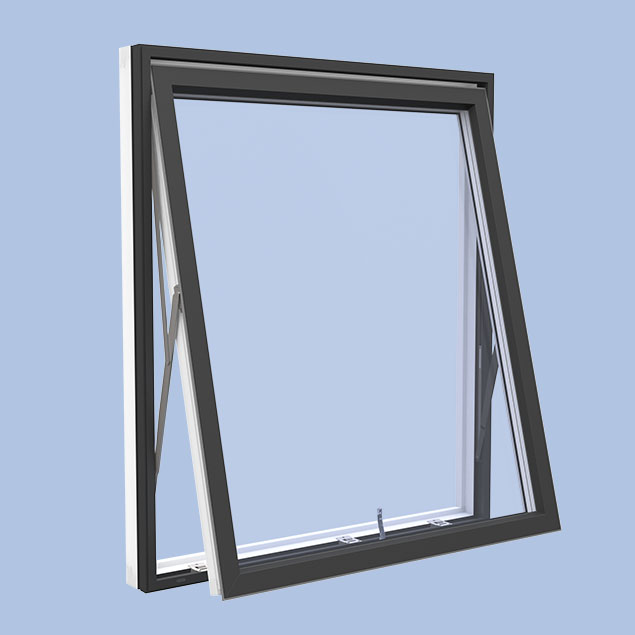
TSG180 – Top Hung Reversible Window
Westcoast composite windows can be manufactured in bespoke sizes and configurations, with opening styles including fixed lights, side-hung, top-hung, projecting, reversible and inward-opening tilt and turn windows.

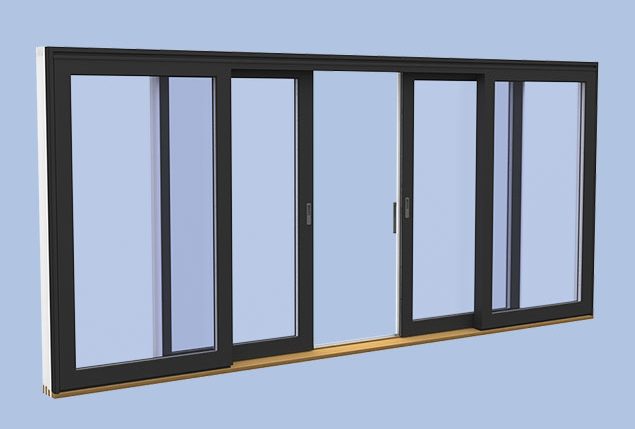
Matching terrace, patio and sliding door systems allow a consistent style and performance across the wider façade.
What should you consider when specifying composite windows?
A strong specification should consider the complete requirements of the project, including:
- Performance: U-values, acoustics, solar control and ventilation
- Configuration: opening styles, access, cleaning and functionality
- Design: external colour, internal timber finish and façade integration
- Longevity: weather exposure, maintenance and future access
- Compliance: security, Building Regulations and certification
- Programme: dimensions, manufacture, delivery and installation
Addressing these requirements early allows the window specification to support the architecture rather than constrain it.
Where can composite windows be specified?
Westcoast composite systems are suitable for a broad range of applications, including private residential developments, apartments, affordable and community housing, education, arts and leisure, commercial developments, refurbishment and contemporary new-build architecture.
Westcoast’s UK portfolio includes Citizens House in Lewisham, Snow Hill Wharf, Harrow Arts Centre, Lambeth Social Care Resource Centre and education projects delivered with major UK contractors.
Specify Westcoast for your next project
Considering aluminium timber composite windows for a new development, refurbishment or commercial project?
Talk to our UK-based team for support with product selection, glazing, finishes, performance requirements, budgeting and project planning, or explore our technical downloads, product information and commercial case studies. CONTACT US

START YOUR PROJECT
Get in touch with our UK-based team to plan your next project.


